A Modern Approach to the Integration Platform
Rapid development of new technologies such as containers (Kubernetes, etc.) and cloud platforms (Azure, AWS, Google, etc.) opens up a new type of problems and challenges. The world is ruthless in this regard, and keeping up with modern trends and technologies is not quite easy.
Converting all existing workloads into modern, ubiquitous containers — so that we reach the ideal state of a single-colour technology stack that is easy to maintain — is in many cases unrealistic and inefficient, both in terms of technology and in terms of cost. This ideal situation is very difficult to achieve, especially in large companies (banks, insurance companies, etc.).
A new type of problem we have to face is: how to integrate all workloads — hosted on virtual machines, in containers, or operated on WebSphere, WebLogic, etc. — simply and with the least effort. How do we achieve the ability to monitor individual operational services in such a heterogeneous environment? How do we manage access and administration for individual services?
The answer is simple — Service Mesh
Today's technologies based on Service Mesh allow you to:
- address most of these challenges and the problems associated with operating services in large environments;
- have a sufficient overview of the services;
- simplify the operation of distributed applications with all the pitfalls associated with them, especially in the context of security;
- achieve clearly managed distribution of application configurations, advanced control, and management of access data;
- more easily implement various deployment strategies such as Canary Deployment, Blue-Green Deployment, and others.
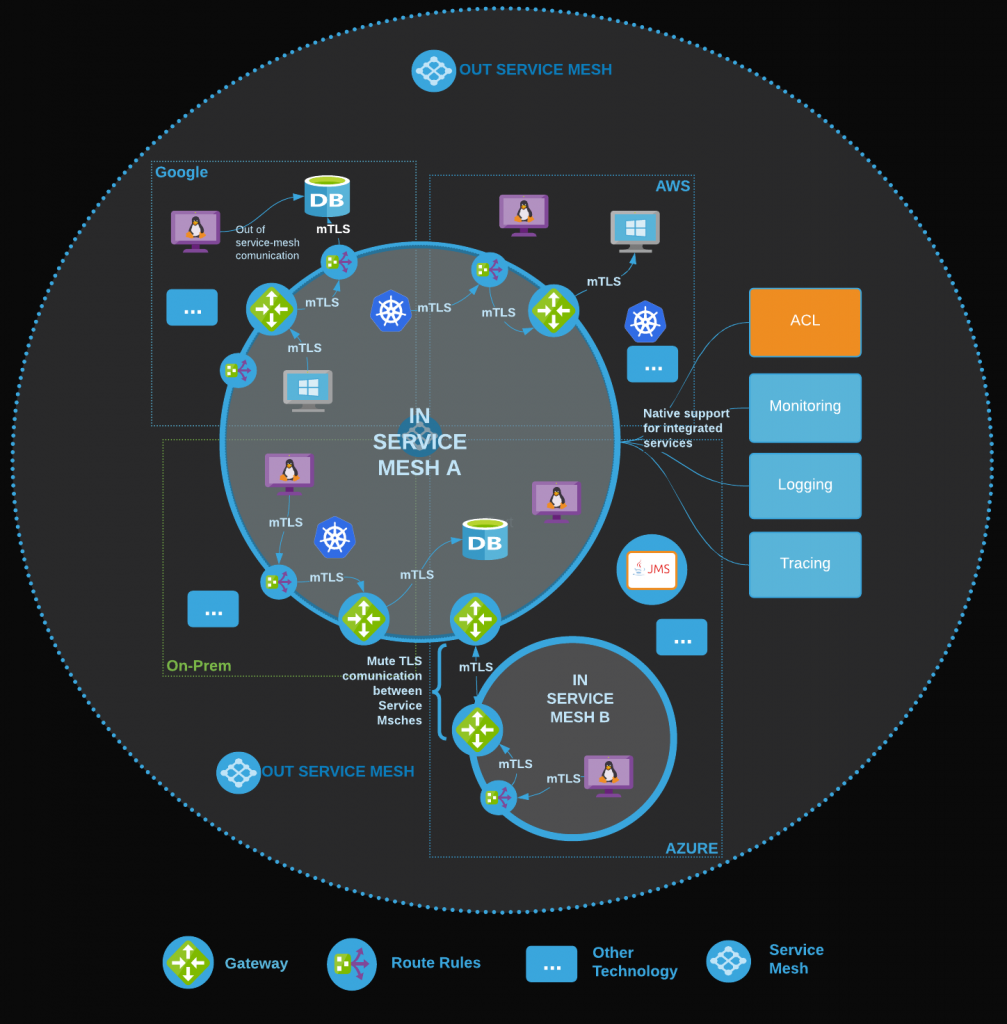
Replacing the legacy integration platform
Yes — the modern approach to Service Mesh can replace existing integration platforms, with added value. Of course, it is necessary to consider the needs of the company in order to identify which Service Mesh technology is right to adopt in each individual case.
Most often in this context, we hear: "We're not ready for this technology." These worries are unnecessary, and this is the magic of a properly chosen Service Mesh — it lets you integrate legacy technology in a way that does not require major changes to existing applications. Gradually, you can migrate all applications to containers, or leave them in their original form.
Where We Apply This
If you are interested in the specific benefits that Service Mesh could bring to your environment, contact us and we will schedule a free consultation. Explore our infrastructure and platform services or meet the team behind Grow2FIT.